Join us on the path of Ki Aikido
Enroll in the beginner group →📅 Free Trial
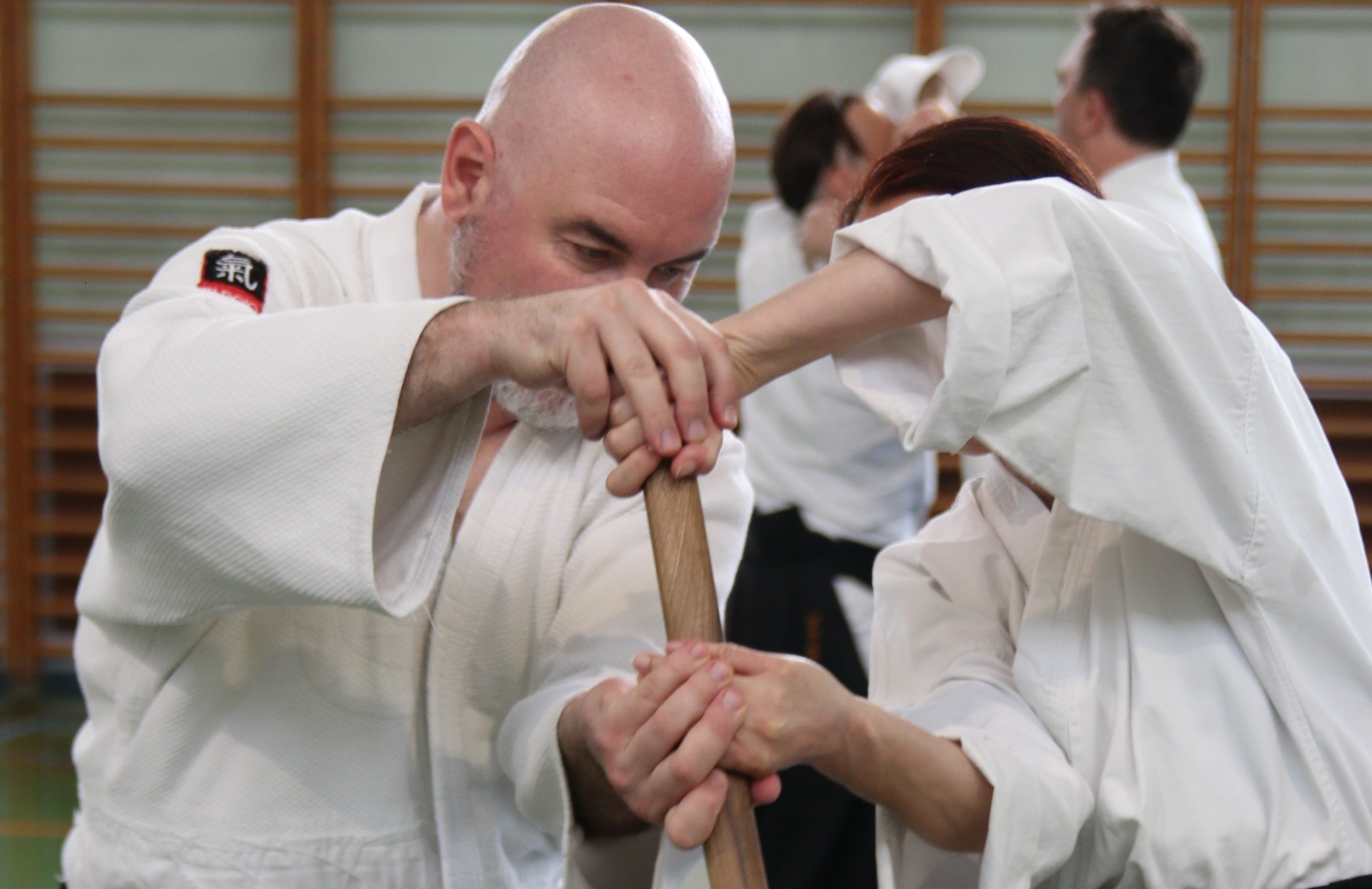
To help you get a better idea of what Ki Aikido practice looks like, you are cordially invited to a free trial session. No equipment is needed for the trial.
⏰ Practice Schedule
We start training on 8. 9. 2026.
Practice takes place every Tuesday and Thursday in the small gym of Dravlje Primary School, Klopčičeva 1, 1117 Ljubljana.
Tuesday: 20:00 – 21:30
Thursday: 20:00 – 21:30
👕 What do you need?
For your first training sessions, you only need comfortable sportswear. Since we practice barefoot, we recommend flip-flops for entering the gym.
💡 First Month
You don't need a kimono for the first month, allowing you to first try out how you like it. Enrollment is open throughout the school year.
📧 For enrollment or any questions, please contact us via the contact form.
The difference between Aikido and other martial arts is illustrated by the following story: Two samurai are standing in a river. The first, young and strong, holds a sharp sword in his hand. Everything that floats down the river, he cuts with great skill. The other samurai is much older. He holds his blunt sword at the level of the water's surface. Everything that comes towards him, he merely redirects, and the debris passes him by. This represents Aikido. The first samurai's sword will sooner or later become dull, he will age and no longer be as agile. The other samurai appears to be cooperating with nature, and for him, neither the sharpness of the katana, nor strikes, nor strength are important. All he does is adapt to the situation...
Aikido is the path of discovering mind-body coordination in everyday life. Aikido is not just a skill for throwing others; Aikido is the path of applying natural laws in everyday life, an art born from martial arts.
An iceberg floats on the water's surface. We usually only see the part that floats above the surface, forgetting that around 60 to 70% of the mountain is below the surface, which we cannot see. So we have a visible and an invisible part.
In people, we only see the physical part or the body's structure, while the mental part is invisible to us. Both together constitute the whole of a person. Similarly, most people think that physical strength is the only strength, forgetting the power of the mind, which cannot be seen.
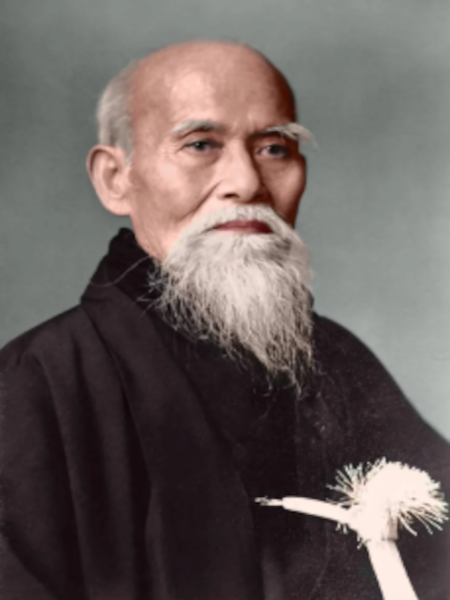
The roots of KI AIKIDO are believed to originate from the art of aiki-jujutsu, which comes from Japan in the 9th century. The great experts of aiki-jujutsu were the samurai, who used it in situations of defense of an unarmed person against a sword. Techniques were passed down from generation to generation until the Daitokan-jujutsu school was formed, which Morihei Ueshiba encountered.
He came up with the idea of changing the art, where the technique speaks of inner harmony, balance, non-violence, and he named it AIKIDO. The teacher's special quality was that he was extremely agile and active in his later years. When he died, his students continued with Aikido, but the principles of KI (inner energy) gradually faded into oblivion. Thus, his student Koichi Tohei established the Shin Shin Toitsu Aikido school, which places great emphasis on KI. He is considered the founder of KI AIKIDO, which was established around 1925. For many years, he was the chief instructor at Morihei Ueshiba and later the founder of the KI NO KENKYUKAI association based in Tokyo.
Aikido translates as the path (DO) to harmony (AI) with energy (universe, spirit) (KI).
— Morihei Ueshiba
Ki Aikido has 4 fundamental rules for mind-body coordination:
Ki Aikido training includes Ki breathing methods, meditation, exercises for developing Ki, techniques that are performed without the use of force, using natural laws of balance and leverage, techniques with a wooden staff (JO), wooden sword (BOKEN), and wooden knife (TANTO).
Training enables complete physical and mental development of the entire organism. All muscle groups are gradually loaded, avoiding the possibility of injuries that are often a result of other sports activities. It is based on skill and complete harmony of movement, not on physical strength, making it suitable for both young and old, as well as women and men.
"If you try to overpower your opponent with force, even if you succeed, you have only created a new enemy."
People who practice martial arts or sports tend to place great importance on competition and physical training. It is good to be stronger than others, but there is also a world beyond competition. If a competitive spirit is cultivated, a person can come into conflict with themselves and others. There are more and more followers of Ki Aikido around the world precisely because of the approach of non-violence, which is reflected in everyday life.
There are no competitions in Ki-Aikido.
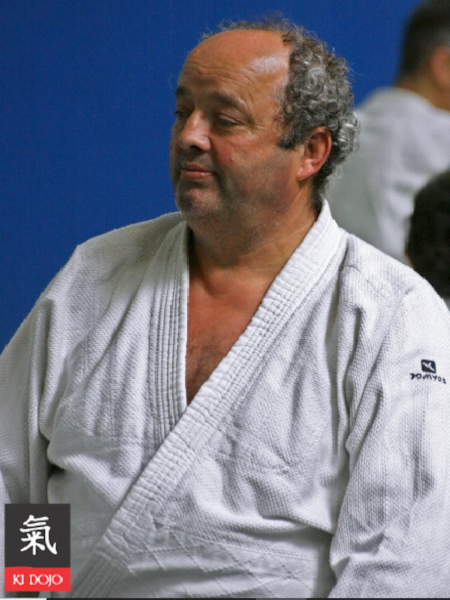
The Ki Dojo Association was founded in 1994 by Stane Kirbiš (1954–2019). He was one of the pioneers of Ki Aikido in Slovenia and achieved the master level of 6. Dan, awarded to him by Kenjiro Yoshigasaki (1951–2021). Stane was a dedicated Ki Aikido teacher and a true treasure trove of knowledge in various martial arts he encountered on his path.
Since 2019, Ki Dojo has continued the path of Ki Aikido as outlined by Yoshigasaki and Stane.
Below are some facts about Stane's path and the development of Ki Aikido in Slovenia, recorded from his notes and stories.
Stane began in 1969, under the guidance of Slavko Božič – Pali, training judo in Šiška. The training was also led by Master Žitnik, from whom Stane first heard about Aikido, and in the fall of 1970, he enrolled in a beginner course. In those days, there was no internet or video, so the beginnings were difficult. They learned from books and also from Aikido films shot on Super 8mm. They were self-taught. The authors of Aikido books they learned from were Morihiro Saito, Koichi Tohei, and Kisshomaru Ueshiba.
Between 1973 and 1975, Stane and his then Aikido teachers from Slovenia were serving in the JNA army in former Yugoslavia. During these years, Aikido in Slovenia practically died out. In 1974, Stane enrolled in the Shotokan karate club under Tokuhisa Takashi. He practiced karate for about two years.
In 1976, Stane Kirbiš, Mirko Jelen, and Tadej Dolenc founded the Aikido Club Ljubljana and continued training and courses at Vič Primary School on Tržaška Street in Ljubljana. In Italy, they connected with the Aikikai federation and attended their seminars. The seminars for the Aikikai federation were led by Hiroshi Tade and Nabayoshi Tamura, who operated in France.
In 1980, Stane attended the 3rd Aikikai Congress in Paris, where he had the opportunity to meet the main Japanese figures in Aikido and their originality. The founder's son, Kisshomaru Ueshiba, was also at the congress. That same year, Stane attended his first Ki Aikido seminar led by Kenjiro Yoshigasaki in Novara, Italy. The different approach of Ki Aikido captivated him so much that he, along with a few enthusiasts, started practicing in Ljubljana.
In 1981, the Aikido Club Ljubljana began training in the Narodni Dom, where in 1983 they organized the first Ki Aikido seminar led by Master Kenjiro Yoshigasaki.
In 1990, Stane attended the opening of Ki No Sato in Tokyo under Tohei's organization. He then went to see the Aikikai federation and saw Kisshomaru Ueshiba for the last time.
In 1994, Stane founded the Ki Dojo Association, which continues to practice and teach Ki Aikido under the auspices of Kenjiro Yoshigasaki and his Ki No Kenkyukai Internationale. Yoshigasaki presented his knowledge in Ljubljana and many other European countries at numerous seminars every year until his death in 2021.
When asked how many years it would take to become a master, the teacher replied:
At least 10 years.
What if I practiced every day?
Teacher: At least 20 years.
What if I practiced every day – even at night?
Teacher: At least 30 years.
The student gets angry and asks: How is that possible?
The teacher turns around and says nothing.
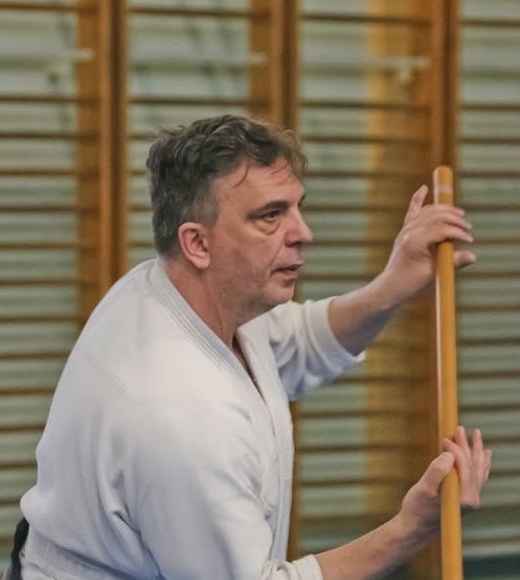
5. DAN

2. DAN
2. DAN

1. DAN
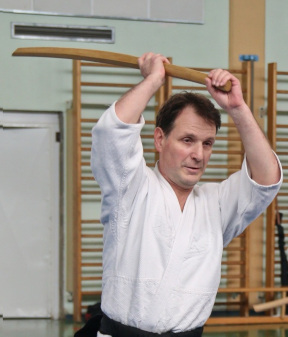
2. DAN
"Ki" exams consist of various exercises for changing body position, Ki-breathing (marked as "Disciplines" in the "Ki Examination Criteria" document). During these exercises, besides correct execution, our stability and calmness are also tested...
Part of the exam are also exercises called "Kenko-Taiso", which we perform with loud counting.
"Kyu" exams consist of performing individual skills called "Hitoriwaza" and performing techniques with a partner called "Kumiwaza" or "Tsuzukiwaza". The list for "Kyu" exams can be found in the "Ki Examination Criteria" document.
"Dan" exams consist of performing partner techniques "Tsuzukiwaza" and performing techniques with three or four partners. The list of Tsuzukiwaza and the list for "Dan" exams can be found in the "Tsuzukiwaza" document.
We regularly publish all important seminars and events we organize or attend. Click "Read more" for details about each event.
Date: May 16–17, 2026
Location: Ljubljana, Slovenia
Instructor: Maurizio Volpe, 9. DAN
Date: July 31 – August 6, 2026
Location: Velebit, Croatia
Instructors: Multiple instructors
Date: October 3–4, 2026
Location: Zagreb, Croatia
Instructor: Michael Holm
Date: November 27–29, 2026
Location: Ljubljana, Slovenia
Instructor: Michael Holm
📍 Dravlje Primary School, small gym
Klopčičeva ulica 1, 1117 Ljubljana
💡 For your first training sessions, you only need comfortable sportswear. Since we practice barefoot, we recommend flip-flops for entering the gym.